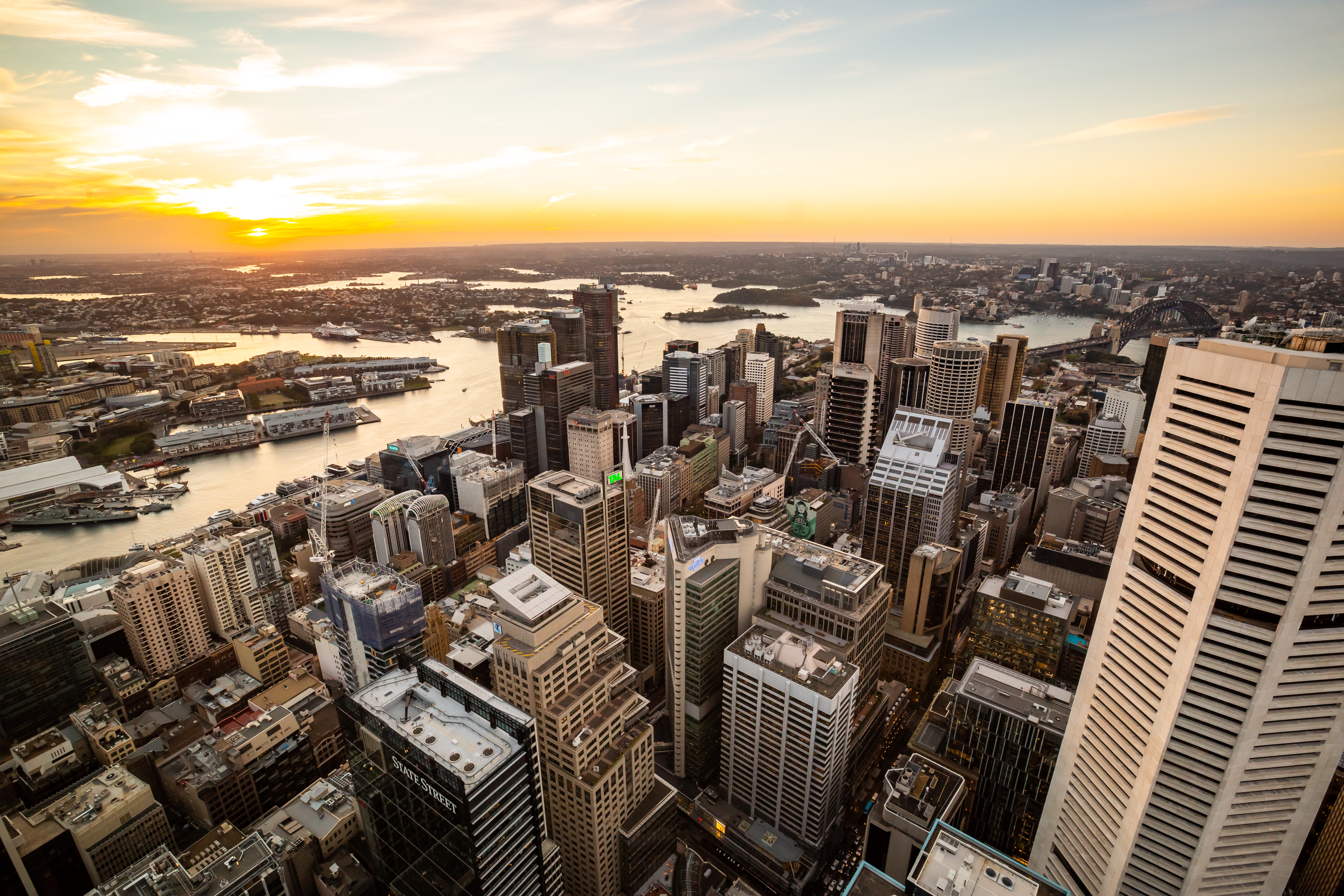
- Only pay for the students who attend on the day
- Curriculum-aligned programs and resources
- Self-guided school excursion tours
Excursion Resources
Sydney Tower Eye provides teachers with NSW curriculum-aligned excursion guides that cover everything you need to know about our 360° observation deck, as well as activities students can complete before and after their visit.
Each document has curriculum links on the sheets, as well as answers where necessary. Don't forget to view our excursion rates, or add on one of our other key attractions (SEA LIFE Sydney, WILD LIFE Sydney, Madame Tussauds Sydney) to make a day of it.
Early Stage 1 (Ages 4-6)

Exploring Towers & Places
In this resource, students engage in a range of interactive activities designed to build their understanding of places, locations and how people interact with the world around them.
Students are encouraged to:
- Compare and order objects based on size and height
- Identify significant landmarks in Sydney and around the world
- Recognise where places are located using simple geographical language
- Observe features of the natural and built environment
- Explore how people use and experience different places
Through visual, hands-on and observational tasks, students develop early geographical knowledge while strengthening their communication and comprehension skills.
Contributes to:
- GE-ES1-01 - Explores places and develops an understanding of
location, people and features of places - GE-ES1-02 - Identifies ways in which people interact with and care for places
- ENe-1A - Communicates with peers and known adults in informal and guided activities
- ENe-2A - Composes simple texts to convey ideas
- ENe-4B - Uses visual cues and thinking strategies to make
meaning from texts - MAE-RWN-01 - Orders, represents and compares numbers
- MAE-SP-01 - Describes position and location
- MAE-ME-01 - Compares and orders objects based on measurable attributes (e.g. height)
Download
Stage 1 (Ages 6-8)

People & Places of Sydney
In this resource, students complete several activities that spark their thinking about what is needed in a place like school, their local community, and the city of Sydney to improve people’s lives.
Contributes to Stage 1 (Years 1-2):
- GE1-1 – Describes features of places and the connections people have with places.
- GE1-2 – Identifies ways in which people interact with and care for places.
Download
Exploring Towers & Places
In this resource, students engage in a range of interactive activities designed to build their understanding of places, locations and how people interact with the world around them.
Students are encouraged to:
- compare and order objects based on size and height
- identify significant landmarks in Sydney and around the world
- recognise where places are located using simple geographical language
- observe features of the natural and built environment
- explore how people use and experience different places
Through visual, hands-on and observational tasks, students develop early geographical knowledge while strengthening their communication and comprehension skills.
Contributes to:
- GE1-1 - Describes features of places and the connections people have with places
- GE1-2 - Identifies ways in which people interact with and care for
places - GE1-3 - Communicates geographical information and uses
geographical tools for inquiry - MA1-GM-01 - Represents and describes the positions of objects in familiar locations
- MA1-GM-02 - Measures, records, compares and estimates lengths and distances
- EN1-OLC-01 - Communicates effectively using language for social and learning interactions
- EN1-RECOM-01 - Comprehends independently read texts
Download
Stage 2 (Ages 8-10)

Exploring Sydney's Built Environment
In this resource, students explore the dynamic built environment of Sydney through observation, mapping and design-based thinking. Using real-world examples from the city, students investigate how places are structured, the purpose of key facilities and how people interact with urban environments.
Students are encouraged to:
- identify and describe features of the built environment
- explore how people use and depend on places within a city
- observe and interpret real-world environments from different perspectives
- develop mapping and sketching skills to represent spatial information
- investigate how buildings are designed and constructed
- consider how environmental factors influence design
- reflect on how cities change over time
- apply their understanding through creative design and problem-solving
Contributes to:
- HS2-GEO-01 - describes how people connect to, use and care for
places and environments - HS2-GEO-02 - explains how people influence places and the
management of spaces - HS2-GEO-03 - uses geographical tools (maps, observations,
sketching) to investigate places
Download
Places are Similar and Different (Trivia Worksheets)
In this resource, students explore the city of Sydney through a fun and interactive trivia-style quiz, covering key locations across North, East, South and West Sydney. Through these questions, students build their knowledge of important landmarks, cultural sites, historical events and local place names, while developing a deeper understanding of how people connect with places.
Contributes to:
- GE2-1 – Examines features and characteristics of places and
environments - GE2-2 – Describes interactions between people, places, and
environments - HT2-1: Identifies celebrations and commemorations of
significance - HT2-2: Describes and explains how significant individuals, groups and events contributed to changes in the local community over time
Download

Exploring Sydney from Above
In this resource, students engage in a series of activities that encourage them to observe, interpret and map the city of Sydney from above. Using the unique vantage point of the Sydney Tower Eye Observation Deck, students estimate real-world data, identify key
landmarks, and explore distance and direction across the city.
Through these tasks, students develop their understanding of location, space and environment by examining how Sydney is organised and how people use and interact with different places, including natural and built environments.
Contributes to:
- GE2-LOC-01 – examines and describes the location of places and
their features - GE2-SPA-01 – represents and interprets information using maps,
directions and spatial technologies - GE2-ENV-01 – explains how people interact with and care for places
- Cross-curricular links: Mathematics
Download

Designing & Exploring Towers
In this resource, students investigate famous towers from around the world and explore the built environment of Sydney through observation, mapping and design-based thinking.
Students examine how buildings are constructed, the purpose they serve and the ways design influences how people interact with spaces.
Students are encouraged to:
- identify and locate significant global and local structures
- explore how buildings are used in different environments
- observe and describe the features of the built environment
- investigate how shapes contribute to structural design
- understand how buildings are planned and constructed over time
- interpret timelines and the historical development of structures
- apply geographical skills through mapping and sketching
- design and create their own model using creative problem-solving
Contributes to:
- HS2-GEO-01 - describes how people connect to, use and value
places and environments - HS2-GEO-02 - explains how people influence places, including
design and construction - HS2-GEO-03 - uses geographical tools (maps, observation,
sketching) to investigate places
Download
Stage 3 (Ages 10-11)
Places are Similar and Different (Trivia & Worksheets)
In this resource, students explore the city of Sydney through a fun and interactive trivia-style quiz, covering key locations across North, East, South and West Sydney. Through these questions, students build their knowledge of important landmarks, cultural sites, historical events and local place names, while developing a deeper understanding of how people connect with places.
Contributes to:
- GE3-1 - Describes the diverse features and characteristics of
places - GE3-2 - Explains interactions and connections between people,
places and environments - HT3-1: Describes and explains the significance of people, groups, places and events to the development of Australia
- HT3-2: Describes and explains different experiences of people living in Australia over time
Download

Places are Similar and Different (Trivia Worksheets)
In this resource, students explore how Sydney’s built environment has changed over time by comparing historical images with the modern city skyline. Using observation, comparison and prediction skills, students investigate how natural and built features influence land use
and how people shape environments through development.
Students are encouraged to:
- identify natural and built features in historical and modern environments
- describe how land use has changed over time
- explain why people develop places for different purposes
- explore the connections between human activity and environmental change
- investigate modern urban development projects such as Barangaroo
- develop skills in observation, interpretation and geographical thinking
- predict how Sydney may continue to change in the future
Contributes to:
- HS3-GEO-01 - describes the diverse features and characteristics of places and environments
- HS3-GEO-02 - explains interactions and connections between
people, places and environments - HS3-GEO-03 - uses geographical tools (maps, images,
observations, fieldwork) to investigate places
Download

Exploring Sydney: Then, Now & Beyond
In this resource, students engage in a series of activities that explore Sydney’s past, present and future through observation, estimation and problem-solving. Using the Sydney Tower Eye as a focal point, students investigate historical events, geographical features and
mathematical concepts to better understand how Sydney has developed over time. Students will estimate real-world data, compare structures, solve measurement-based problems and sequence significant events in Sydney’s history. The resource also
encourages creative thinking, asking students to imagine both future and past perspectives of the city.
Students are encouraged to:
- estimate, calculate and interpret real-world data, including height, distance, time and capacity
- apply problem-solving strategies to measurement and rate-based scenarios
- develop spatial awareness by observing and interpreting the layout of Sydney from above
- identify and sequence significant historical events that have shaped Sydney over time
- explore how people interact with and influence natural and built environments
- use creative thinking to imagine past and future perspectives of places
Contributes to:
- HS3-HT2-01 - Describes and explains how significant people,
events and developments have shaped Australia - HS3-HT2-02 - Uses historical concepts (continuity, change,
cause/effect, significance) - HS3-GEO2-01 - Examines how people influence places and
environments - HS3-GEO2-02 - Explains spatial patterns and connections
- MA3-RAT-C-01 - Uses rates and ratios
- MA3-MAS-C-01 - Measures and calculates with length, mass,
capacity - MA3-NUM-C-01 - Solves problems involving whole numbers
- MA3-ALG-C-01 - Represents and solves problems using equations
- EN3-CWT-01 - Composes texts for different purposes and
audiences - EN3-UARL-01 - Understands how texts convey ideas
Download
Early Stage 1
Supplement your excursion visit with this great worksheet!
Stage 1
Supplement your excursion visit with this great worksheet!
Stage 2 - General
Supplement your excursion visit with this great worksheet!
Stage 2 - Building Towers
Supplement your excursion visit with this great worksheet!
Stage 2 - Places & Stages
Supplement your excursion visit with this great worksheet!
Stage 3 - General
Supplement your excursion visit with this great worksheet!
Stage 3 - Every-changing City
Supplement your excursion visit with this great worksheet!
